
Within the WeChat ecosystem, mini games and service mini programs share some base capabilities, but engineering goals diverge sharply: the former targets retention plus ad/in-app purchase revenue; the latter targets business closure and data return. In 2026 many enterprises try "one team, one codebase" for both—and often hit walls on package size, category review, and performance tuning.

Current State: Typical Pain Points of Mixed Projects
Service mini programs emphasize forms, payments, membership, and backend integration; mini games emphasize frame rate, resource subpackaging, and social sharing. WeChat applies separate game-category licensing and content review; service categories focus on business qualifications and privacy compliance. Forcing both into one mini program often leads to inaccurate category filing, review rejection, and main packages approaching the 2MB cap. Establish cross-department coordination: product, R&D, and operations review data and tickets on a fixed cadence, folding exception handling, permission changes, and report optimization into routine operations—not post-launch firefighting.
In execution (Part 1), prioritize least-privilege access, traceable processes, and explainable reports—avoid reverting to spreadsheets and instant messaging after go-live. Define delivery boundaries, knowledge transfer, and contingency plans with vendors or internal builders to reduce capability gaps after project close; keep version records and audit trails for compliance checks and iteration.
Mini games typically use Canvas/WebGL engines (Cocos, Laya, etc.) with texture and audio assets; service apps often use native or cross-platform frameworks (Taro, uni-app) against REST/GraphQL. State management, login, and analytics models should not be blindly reused—or game events pollute business funnel data. Design training and runbooks during rollout so business leads can handle daily configuration, exceptions, and version upgrades without vendor staff on site.
Decision Framework for Split Projects
Split into independent projects when goals include standalone game monetization, game licensing or cultural qualifications, or when expected DAU and user profiles differ significantly from the business mini program. For lightweight interactive marketing (lotteries, check-ins) inside a service mini program, use activity subpackages—but control package size and review boundaries. Frontline feedback shows the gap is rarely a single tool—it is whether process, data, and org coordination run under one rule set; evaluate technical feasibility and change-management cost together.
In execution (Part 2), prioritize least-privilege access, traceable processes, and explainable reports—avoid reverting to spreadsheets and instant messaging after go-live. Change management should not stop at release notes—it must cover rollback plans, impact assessment, and key-user communication to ensure business continuity.
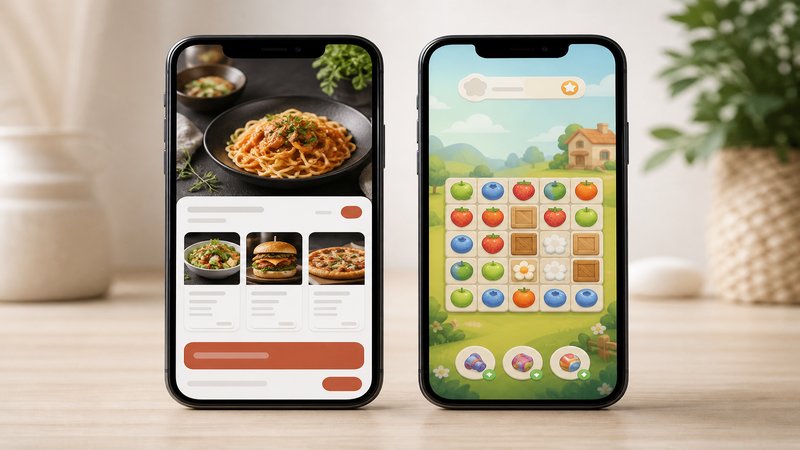
UnionID linking, coupon issuance, and membership tier sync should flow through a backend hub and unified user service—not by forcibly merging front-end repositories. XYN Technology recommends: separate front-end repos, unified backend—so game releases do not block compliance iterations on the business mini program. External integration APIs should keep audit logs and rate limits—balancing openness with compliance and reducing risk of sensitive data leakage or abuse.
Case Study: Dual-App Strategy for a Chain Restaurant Brand
A client planned one mini program for both ordering and casual mini games. After assessment they split into a service ordering mini program and a standalone marketing game: the former connects to POS and membership hub; the latter drives viral acquisition. Mini-game CAC dropped 18%; ordering mini program review cycle shortened from an average of 9 days to 4; ops teams can release in parallel. Data definitions and permission models must align at project kickoff and be re-verified each iteration to prevent report drift that distorts management decisions.
In execution (Part 3), prioritize least-privilege access, traceable processes, and explainable reports—avoid reverting to spreadsheets and instant messaging after go-live. Design training and runbooks during rollout so business leads can handle daily configuration, exceptions, and version upgrades without vendor staff on site.
Mini games and service mini programs are not "a few extra pages"—they are different product forms and compliance paths. At kickoff clarify commercial goals, qualification lists, and data ownership; connect user assets through a hub and protect experience and review efficiency with separate engineering. In software development and digital delivery practice, break "WeChat mini games vs service mini programs: when to split projects" into measurable milestones with owners and acceptance criteria—avoid requirements drifting in verbal updates.
Summary and Outlook
Around summary and outlook, in scenarios related to splitting WeChat mini games and service mini programs, teams should clarify goal boundaries, data definitions, and coordination mechanisms, turn abstract asks into acceptance-ready deliverables, and align progress and risk on a biweekly rhythm.
In execution (Part 4), prioritize least-privilege access, traceable processes, and explainable reports—avoid reverting to spreadsheets and instant messaging after go-live. In software development and digital delivery practice, break "WeChat mini games vs service mini programs: when to split projects" into measurable milestones with owners and acceptance criteria—avoid requirements drifting in verbal updates.
XYN Technology continues building methodology and delivery experience in software development. Teams with needs around "WeChat mini games vs service mini programs: when to split projects" are welcome to connect and advance verifiable, operable digital transformation together.