
In 2026, customer Q&A, copy generation, and smart shopping in enterprise mini programs are commonplace. But generative AI involves algorithm filing, content safety, privacy policy updates, and accurate category selection. Many teams complete WeChat-side review yet miss national algorithm filing and domestic model-provider qualifications—forcing features offline.
Regulatory Background and Dual-Track Compliance
Algorithms with public-opinion or social-mobilization attributes require filing; the mini program platform also requires AI capability purpose, training data summary, human review mechanism, and user complaint channels. Materials overlap but are not identical—unify messaging. Establish cross-department coordination: product, R&D, and operations review data and tickets on a fixed cadence, folding exception handling, permission changes, and report optimization into routine operations—not post-launch firefighting.
In execution (Part 1), prioritize least-privilege access, traceable processes, and explainable reports—avoid reverting to spreadsheets and instant messaging after go-live. Define delivery boundaries, knowledge transfer, and contingency plans with vendors or internal builders to reduce capability gaps after project close; keep version records and audit trails for compliance checks and iteration.
Privacy policies that omit AI personal-data processing; user agreements without generated-content disclaimers; no one-click disable or human takeover; overseas APIs without cross-border data assessment—all may trigger platform rejection or regulatory inquiry. Design training and runbooks during rollout so business leads can handle daily configuration, exceptions, and version upgrades without vendor staff on site.
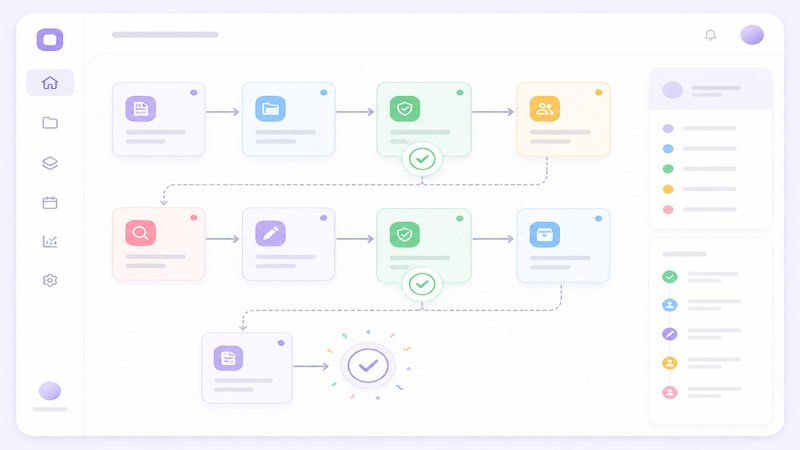
Collaboration Checklist: Kickoff to Launch
Prefer filed domestic model services; filter prompts and outputs for sensitive and violating content; retain session logs for audit with retention period and masking. Critical scenarios (medical, financial advice) should limit generation scope and require human review. Frontline feedback shows the gap is rarely a single tool—it is whether process, data, and org coordination run under one rule set; evaluate technical feasibility and change-management cost together.
In execution (Part 2), prioritize least-privilege access, traceable processes, and explainable reports—avoid reverting to spreadsheets and instant messaging after go-live. Change management should not stop at release notes—it must cover rollback plans, impact assessment, and key-user communication to ensure business continuity.

Prepare algorithm filing number or platform-required statement, model service contract, content safety management policy, and contingency plan. Mini program category must match actual AI function—avoid "tool" category for open-ended chat. External integration APIs should keep audit logs and rate limits—balancing openness with compliance and reducing risk of sensitive data leakage or abuse.
Case Study: Education Training Smart Q&A
A client added a subject Q&A assistant to its mini program. XYN Technology assisted with filing disclosure, limiting answers to authorized courseware, attaching source paragraphs to outputs, and setting teacher review tickets. Feature passed review on first submission; parent complaint rate was 40% below traditional forum-style Q&A. Data definitions and permission models must align at project kickoff and be re-verified each iteration to prevent report drift that distorts management decisions.
In execution (Part 3), prioritize least-privilege access, traceable processes, and explainable reports—avoid reverting to spreadsheets and instant messaging after go-live. Design training and runbooks during rollout so business leads can handle daily configuration, exceptions, and version upgrades without vendor staff on site.
AI in mini programs is not pure technical integration—it is joint product and compliance design. Include algorithm filing, privacy updates, and content safety testing in one milestone; reserve 3–4 weeks for materials and verification in the dev schedule to avoid marketing deadline traps. In software development and digital delivery practice, break "generative AI in mini programs: algorithm filing and category checklist" into measurable milestones with owners and acceptance criteria—avoid requirements drifting in verbal updates.
Summary and Outlook
Around summary and outlook, in scenarios related to generative AI in mini programs and algorithm filing coordination, teams should clarify goal boundaries, data definitions, and coordination mechanisms, turn abstract asks into acceptance-ready deliverables, and align progress and risk on a biweekly rhythm.
In execution (Part 4), prioritize least-privilege access, traceable processes, and explainable reports—avoid reverting to spreadsheets and instant messaging after go-live. In software development and digital delivery practice, break "generative AI in mini programs: algorithm filing and category checklist" into measurable milestones with owners and acceptance criteria—avoid requirements drifting in verbal updates.
XYN Technology continues building methodology and delivery experience in software development. Teams with needs around "generative AI in mini programs: algorithm filing and category checklist" are welcome to connect and advance verifiable, operable digital transformation together.