
What the hotel front desk fears most is not a shortage of rooms, but unsynchronized room statuses: OTA bookings are already sold, yet the hotel system still shows rooms as available; guests arrive to be told “we’re cleaning,” while the housekeeping task is still being announced in the WeChat group. Overbooking, missed room assignments, and delayed cleaning all pile up—resulting in losses even greater than those from vacant rooms.
How should operations be broken down: reservations, room assignments, housekeeping, check-in and check-out
A functional hotel system must at least integrate four state machines, rather than merely providing an “order list”:
- Reservation occupancy: Immediately reserve inventory upon receiving a channel order, with clear rules for releasing reservations in case of cancellations or no-shows
- Room assignment: Automatic or semi-automatic allocation based on room type, floor, connecting rooms, and maintenance locks
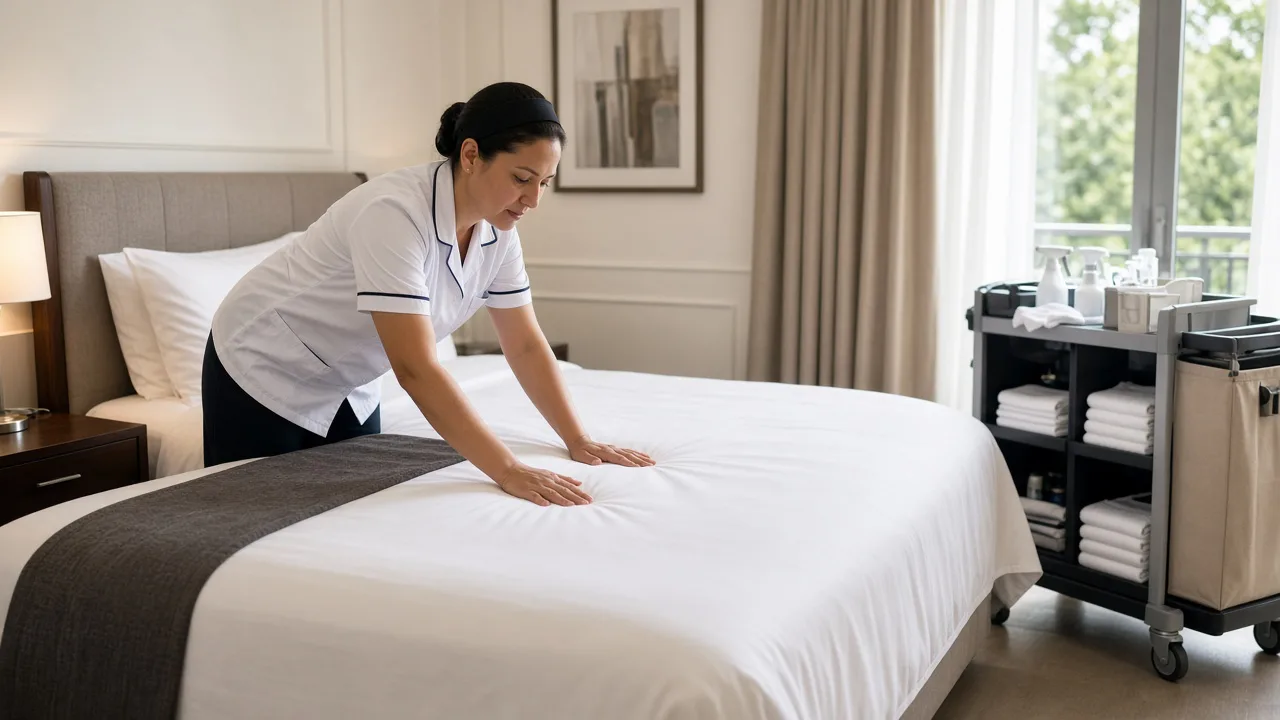
- Housekeeping work orders: Cleaning is triggered upon checkout, and rooms are marked as sellable only after passing inspection; maintenance orders are interlocked with room status
- Check-in/check-out: Deposit collection, additional charges, late check-outs, and night audit procedures must remain consistent
Excel can record how many rooms are empty tonight, but it cannot track the concurrent states of “cleaning in progress—unavailable” and “maintenance lock.” What truly causes disputes at the front desk is the lack of a unified occupancy lock when writing inventory across multiple channels.
How to design: roles and data
It’s recommended to divide roles into: reservation agent, front desk staff, housekeeping supervisor, floor attendant, maintenance technician, and night auditor. Housekeeping staff only see tasks assigned to their own floor; front desk personnel cannot directly sell rooms undergoing maintenance; night auditors are responsible for closing accounts and performing daily room status reconciliation.
- Room types and physical rooms: sellable attributes, floors, connecting rooms, smoking/non-smoking/accessible tags
- Inventory calendar: occupied by night, including reserved, confirmed, and locked rooms
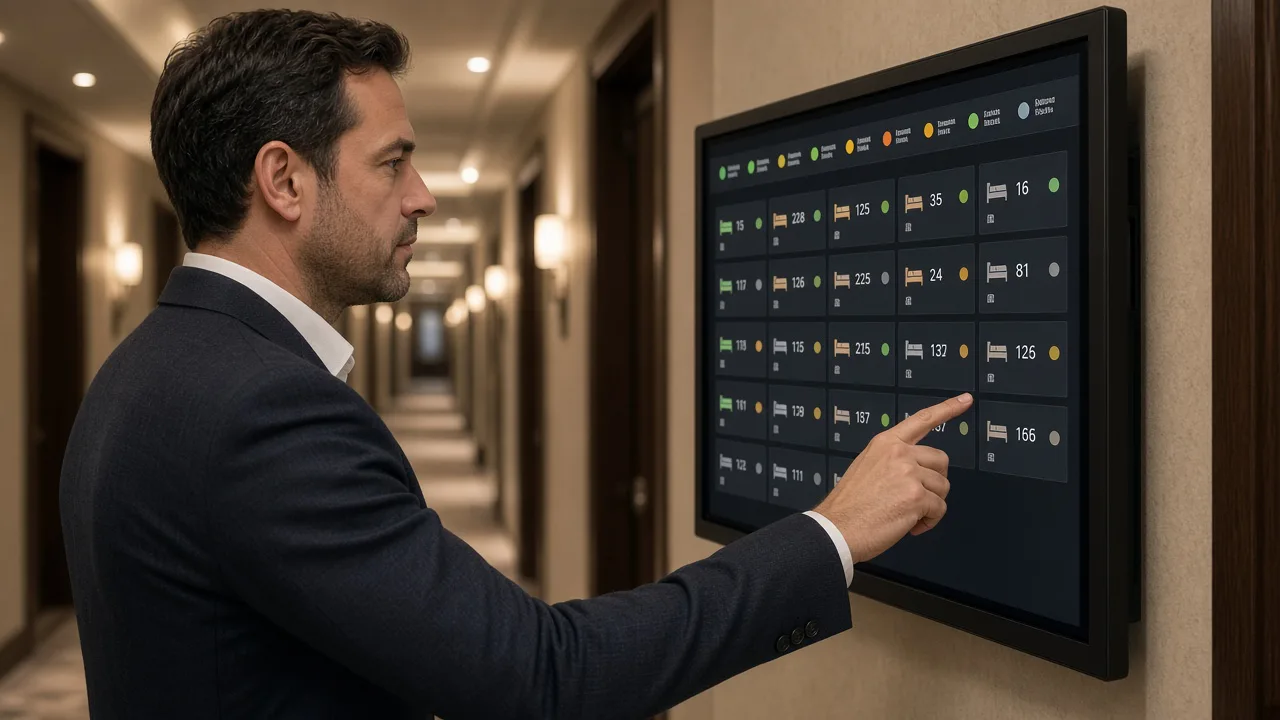
- Room status: clean/empty, dirty/empty, occupied/clean, occupied/dirty, under maintenance, out of service
- Housekeeping tasks: trigger source, responsible person, start/completion times, inspection results
- Orders: channel, guarantee rules, special requests, accompanying guests
Interface boundaries must be strict: OTA and official website orders only record “room-type inventory”; physical room assignments can be handled later, but before confirming arrival, the room must be assigned to a specific room number or clearly designated sellable pool. If housekeeping isn’t finished, the room status must not change to clean/empty.
How to develop and accept the system
Unified inventory services for channel integration: occupy inventory upon order placement, release upon payment timeout, and rollback upon cancellation. Failed pushes must be retryable and idempotent to prevent a single order from occupying two rooms. The housekeeping side starts work by scanning the room number to avoid misassigning rooms. Night audit tasks compile a list of rooms that haven’t checked out, settled accounts, or reached normal status—rather than relying on manual rounds.
Acceptance scenarios should cover peak-season dirty data:
- If two channels simultaneously book the last room of the same type, will only one order succeed
- After checkout, if housekeeping isn’t finished, can the room still be assigned to a new incoming guest
- During maintenance lock periods, can channels still sell this physical room
- When delaying check-out overlaps with the next night’s booking, how should the system prompt reassignment
- Is the room status after night audit consistent with the cashier’s records
The core of a hotel system isn’t “pretty calendar color blocks,” but rather ensuring that the three locks—inventory, housekeeping, and maintenance—don’t conflict with each other.
Common on-site failures
Unclear overbooking strategies: Some hotels tacitly allow overbooking by absorbing upgrades, while the system rigidly blocks it based on physical rooms—or vice versa, completely ignoring it. “Overbookable room types/limits/upgrade paths” should be configured rather than left to verbal habits. Housekeeping piece-rate vs. quality conflicts: Evaluating solely by room count encourages omissions; unsatisfactory inspections should result in returning tasks and affecting piece-rate pay. Lost member preferences: High-floor rooms, connecting rooms, etc., written in notes go unnoticed—should instead be structured into room assignment rules.
What to monitor first during implementation
First integrate “channel inventory occupation → room assignment → closed-loop housekeeping → night audit,” then proceed with revenue management and upselling. During the first two weeks post-launch, focus on: frequency of overbooking/refusals, proportion of pre-arrived guests without assigned rooms, number of late arrivals caused by delayed housekeeping, and discrepancy counts from night audits. Only after reducing these four metrics can we begin discussing intelligent pricing.
How to implement channel inventory services
It’s recommended to establish a separate inventory service, with the order system and channel connectors only calling functions for inventory occupation/release/query. Inventory occupation must include expiration time: automatically release unpaid orders to avoid “zombie occupancy.” Physical room assignments can be deferred until the day before arrival, but the sellable quantity per room type must remain accurate in real-time. For chain hotels with multiple locations, inventory keys must carry store IDs, strictly prohibiting cross-store deductions.
Model the impact of housekeeping and maintenance on inventory: dirty rooms don’t count as sellable; maintenance locks deduct from the sellable pool; out-of-service room types are directly removed from channel listings. Front desk manual changes to room status must record reason codes, facilitating night audit reviews of anomalies.
Boundaries between revenue management and membership benefits
Revenue management price adjustments shouldn’t directly alter historical orders—only future sellable inventory is affected. Member privileges (late check-out, room upgrades) should be encoded as rule engine inputs, read during room assignment rather than relying on duty managers’ memory. Dynamic pricing may not be necessary in Phase I, but keep the “manual price adjustment approval” process open to avoid everyone arbitrarily changing prices.
At least collect the following data: source channel for nightly inventory occupation, assigner of room assignments, completion time of housekeeping, and time of check-in procedures. With this information, you can pinpoint whether delays stem from slow housekeeping or late room assignments—rather than relying on vague impressions during meetings.
Night audit consistency with cashiers
Night audits aren’t just about closing accounts—they also verify: current occupancy, unsettled bills, locked rooms, and abnormal cases where unfinished housekeeping tasks are still assigned to rooms. Late check-out fees and minibar consumption must be recorded before departure; after night audits, no retroactive red-ink corrections of yesterday’s transactions are allowed. Front desk handover lists automatically generate incomplete task reports, minimizing omissions during verbal transitions.
Different cancellation rules across channels mean inventory release points must be configured separately for each channel. Inventory consumed by free upgrades should be released from the original room type and allocated to the target room type, with separate reporting to avoid disrupting revenue analysis due to upgrade-related confusion.
When training front desk staff, use two drill scripts—“last-room simultaneous ordering” and “unfinished housekeeping mistakenly assigning rooms”—which prove more effective than simply explaining feature menus. For launch switches, it’s recommended to first disable channel-based overbooking, stabilize for two weeks, and then gradually lift overbooking limits by room type.
For chain groups seeking centralized reservations, unify room type codes and cancellation policy dictionaries first, then connect to inventory services; if the dictionary remains inconsistent, avoid forced centralization, lest errors at a single location spread across the entire network.
Special needs for concierge-style services (surprise decorations, airport transfers) should be formalized as additional task orders, allowing marking “VIP pre-arrival ready” only after completion—separate from regular housekeeping tasks.