
The most common issue with multilingual official websites isn’t awkward translation, but rather the source text has already been updated, yet the translation site still displays outdated content. For example, a Chinese promotional page goes live, while the English price list remains from last quarter; or a Japanese legal disclaimer is left uncorrected, leading to direct complaints from overseas customers. The root cause is usually: each language version operates independently without a unified release gate for “identical content packages.”
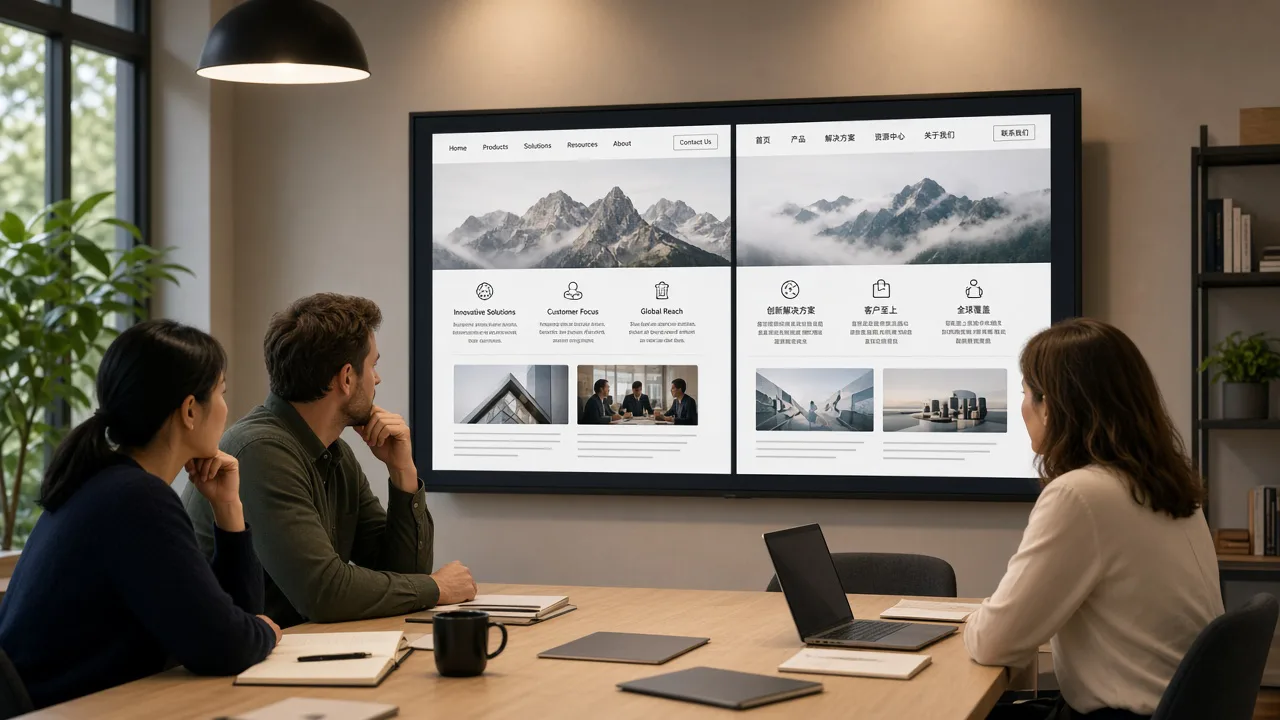
Breaking down the problem: content package, language status, and release window
Treat an entire revision as a content package, rather than just “updating a few pages”:
- Source-language entries: titles, body text, CTAs, and structured fields (prices, specifications, compliance statements)
- Language-specific copies: one record per language, with translation status—pending/under translation/pending review/ready
- Release window: the set of languages allowed to go live, along with a unified activation time; if any language is not ready, the entire package is blocked or downgraded according to policy
- Rollback point: roll back by content package version, rather than just a single language file
Uploading Word translations via cloud storage and manually pasting them is the easiest way to lose fields and links. If a CMS allows “a specific language to publish separately,” it can result in a half‑new, half‑old international website.
How should we design this?
Roles: content owner (source language), translator/agent, legal reviewer (for specific sections), and release manager. Translators cannot start work until the source language is finalized; a language cannot be marked as ready unless its legal section has been reviewed. Frontend caches expire based on the content package version number, preventing old pages from lingering in the CDN.
- Content package: business key, list of target languages, planned launch date
- Entries: field‑level diffs, screenshot comparisons, and terminology table references
- Access control rules: mandatory languages, deferred languages, and blocking conditions
- Release logs: operator, version, and hashes for each language
SEO considerations: hreflang and canonical tags must change with the version; when removing a language, return the correct HTTP status code instead of serving a soft 404. Temporary language versions for promotional pages may follow a “source language plus English” strategy, but this must be explicitly configured in access controls—not left to verbal agreements.
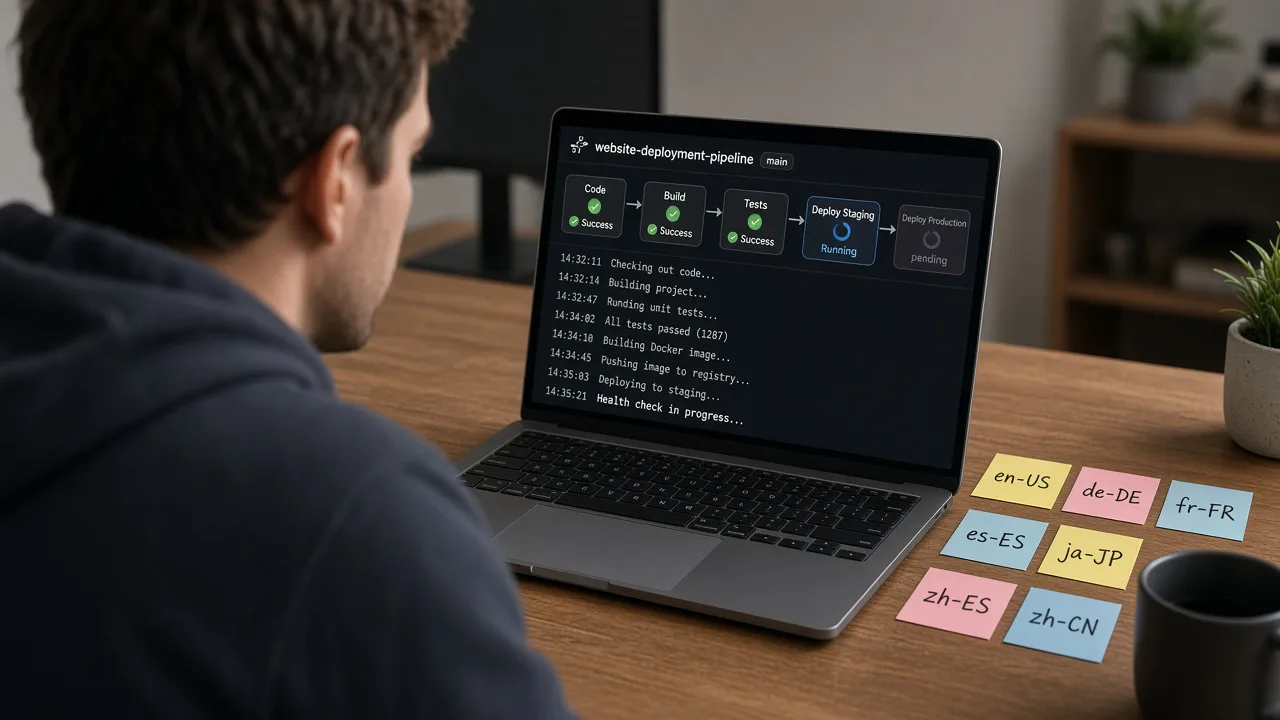
Development and acceptance
Translations can accept machine‑translated drafts, but final readiness requires manual confirmation. Structured fields (prices, dates) are prohibited from containing free text; individual fields must be translated separately to minimize oversight. Pre‑release environments verify compliance by language path: after the source text is updated, any language not yet ready must not be accessible to external users displaying the new price.
Acceptance scenarios:
- When the source text is updated but the English version is not yet ready, should production still display the old price, or keep the entire page under maintenance (according to policy)?
- Is forced release bypassing access controls recorded in audit logs and subject to dual approval?
- After a rollback, is the hreflang consistent?
- Does long‑term lag in a particular language trigger a red alert on the dashboard?
- Are changes to the terminology table automatically flagged for related entries?
The discipline for multilingual sites is: ensure full compliance before going live. Slow progress is acceptable, but half‑new, half‑old is not.
Failure modes
Marketing launches first in Chinese: campaigns have already been deployed, but the translation site remains untouched, resulting in a fragmented user experience overseas. Access controls default to “all languages fully prepared”; emergency exceptions require approval and must be resolved within a set timeframe.Direct machine translation: legal and pricing pages are off‑limits; product descriptions may be machine‑translated with selective human review.Technical stacks diverge across language‑specific sub‑sites: access controls and version numbers cannot be unified, so priority should be given to converging onto a single content service.
What to monitor after launch
Track for four weeks: hours of cross‑language content delays, number of access‑control bypasses, customer complaints caused by outdated translations, and frequency of rollbacks. Only when delays and bypasses decrease can we discuss enabling automatic translation across the entire site.
How to integrate the translation workflow into access controls
Finalizing the source language triggers the translation task: machine‑translated drafts are optional, but human review is mandatory. Reviewers are assigned by section, with different people handling product pages and recruitment pages. Rejections must clearly identify specific fields—no vague comments like “please revise again.” Once ready, the content moves into the full‑package calculation process.
Outsourced translators use restricted accounts, only able to view assigned tasks and unable to directly initiate releases. Double‑sided bilingual document comparison reduces missing segments. Links and image alt texts are checked separately; many “old‑draft incidents” actually stem from outdated links.
For highly compliant pages (privacy policies, contract terms), a mandatory legal role is required before launch; overdue re‑review schedules are generated by language, preventing situations where English is updated but Chinese is forgotten.
Key technical implementation points
Content services store version information at the field level; static sites generate version manifest files during construction, allowing operations teams to verify whether CDN objects are aligned. Pre‑release domains render completely by language, using crawler scripts to sample key URLs for prices and dates.
If using translation memory, changes to the source text must flag corresponding memory entries to prevent old sentences from being reused in new contexts. In case of terminology conflicts, the business owner’s decision prevails, with change notes added accordingly.
It is recommended to avoid peak business hours during release windows; failures should automatically halt at the pre‑release stage, rather than proceeding halfway to production. Monitoring “language readiness delays” as a KPI for content teams is more meaningful than tracking “how many pages were published.”
Accident review template
A typical accident: Chinese price updates go live, but English still shows the old price, causing customer service to lock orders based on the English quote. The review must clearly document: which access control gap was exploited, who had the authority to bypass it, how long the rollback took, and the extent of customer impact. Turn “bypassing access controls” into an exception requiring dual confirmation, with audit records kept.
Conduct quarterly rollback drills: deliberately contaminate secondary languages, then walk through the full rollback and notification process. These drills reveal that when CDN cache TTLs are too long, proactive policy adjustments are needed—don’t wait until an actual incident occurs to make changes.
Open up “language consistency queries” for sales and customer service: enter a product SKU to see current prices and effective dates across all languages. Proactive identification reduces reliance on user screenshots.
Integration with marketing campaigns
The landing page URL referenced in campaign materials must be bound to the content package version. Ad groups targeting languages not yet ready are automatically paused or redirected to maintenance pages, avoiding wasted ad spend on outdated prices. Campaign staff only check the “available languages” status, not guessing CMS settings themselves.
At the end of a campaign, all languages simultaneously become invalid; residual external links are redirected via 301 to the overview page, with version snapshots retained for future reference.
If subsidiaries each use independent CMS systems, at least unify the “content package status API”: the headquarters’ marketing center queries each site’s readiness before initiating deployment. Without such an API, access controls remain limited to verbal synchronization, and accident rates will not decline.
Include the content package number in customer service ticket fields, making it easier to trace which release corresponds to old translation complaints.