
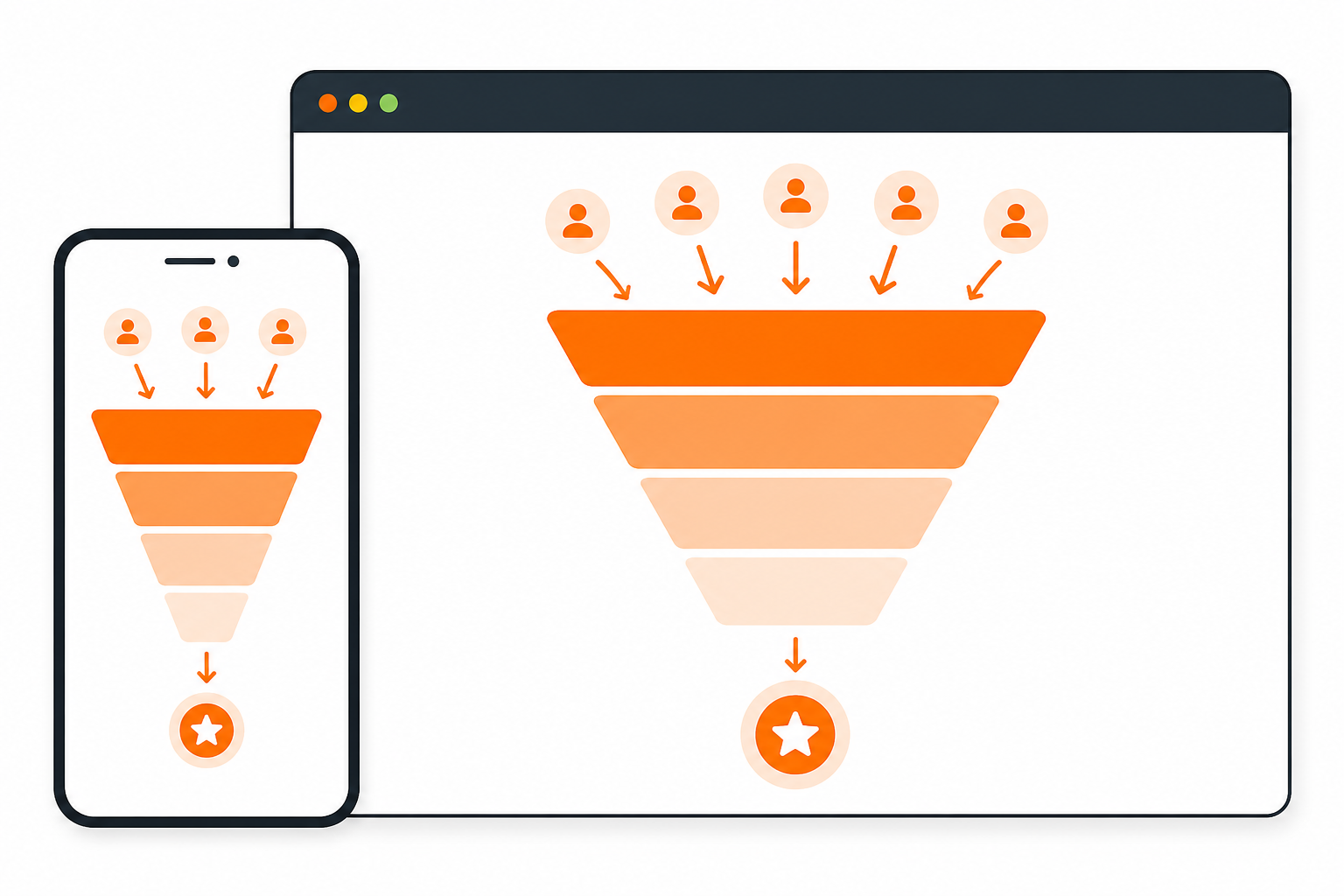
Search, feeds, short video, and private domains all route traffic to the corporate site. Slow first paint, messy structure, and unclear conversion paths waste ad spend at the landing page. 2026 builds must integrate brand expression, lead conversion, and search understanding—especially for B2B, where the site is the first trust checkpoint.
The Site Is More Than a Business Card
Task-centered UX: products, cases, inquiry entry, and credentials within three clicks. Marketing sites can be static/SSR; operational sites need CMS. Performance targets: controlled first paint, lazy images, mobile-first; security covers HTTPS, anti-abuse, permissions, backups. Establish cross-department cadence: product, engineering, and operations review data and tickets on a fixed rhythm, folding exception handling, permission changes, and report optimization into ongoing operations—not post-launch firefighting.
In execution (part 1), prioritize least-privilege permissions, traceable workflows, and explainable reports—avoid reverting to spreadsheets and IM after go-live. Agree delivery boundaries, knowledge transfer, and contingency plans with vendors or internal builders to reduce post-project capability gaps; keep version history and audit trails for compliance and iteration.
Conversion paths connected, backend operable, performance baseline, basic SEO, lead callbacks working. News and service taxonomy aligned—building durable content assets. The site is a long-term asset; launch is the starting line. During rollout, design training and operations manuals so business leads can handle daily configuration, exception handling, and upgrades without vendor staff on site.
Information Architecture, Performance, and Conversion
Regarding Information Architecture, Performance, and Conversion, in scenarios related to 2026 Corporate Website Standards: Brand Conversion, Performance, and SEO as One Delivery, teams should clarify goal boundaries, data definitions, and collaboration mechanisms first—turn abstract requests into an acceptance-ready delivery list and align progress and risks on a biweekly cadence.
In execution (part 2), prioritize least-privilege permissions, traceable workflows, and explainable reports—avoid reverting to spreadsheets and IM after go-live. External integration APIs should retain audit logs and rate limits—balancing openness with compliance to reduce sensitive data leakage and abuse risk.

Acceptance Checklist
Regarding Acceptance Checklist, in scenarios related to 2026 Corporate Website Standards: Brand Conversion, Performance, and SEO as One Delivery, teams should clarify goal boundaries, data definitions, and collaboration mechanisms first—turn abstract requests into an acceptance-ready delivery list and align progress and risks on a biweekly cadence.
In execution (part 3), prioritize least-privilege permissions, traceable workflows, and explainable reports—avoid reverting to spreadsheets and IM after go-live. Establish cross-department cadence: product, engineering, and operations review data and tickets on a fixed rhythm, folding exception handling, permission changes, and report optimization into ongoing operations—not post-launch firefighting.
XYN Technology continues to refine delivery methodology in software development. Teams with needs related to "2026 Corporate Website Standards: Brand Conversion, Performance, and SEO as One Delivery" are welcome to connect and advance verifiable, operable digital transformation together.