
On injection molding, stamping, and die-casting floors, molds and fixtures are often more precious than the machines—yet far less likely to be controlled by a system. Checkout lives in a notebook, life is a guess, calibration certificates sit in a drawer, and the line only stops when wear is found during setup. Lose one mold for a day, and the delivery date collapses with it.
Where the ledger goes wrong
Multiple sets with the same name: nobody can tell which is in stock, which is on a machine, which is in repair. Books say “in stock” while it is already on a press; a tool in repair is still reserved by the plan; inserts, guide pins, hot runners and other sub-parts are stripped and cannot be restored to the parent mold. Traceability lives in chat: who last checked it out, what was repaired, whether it was calibrated—the shift cannot say. Life is “probably still good” instead of shot count, so scoring happens mid-batch.
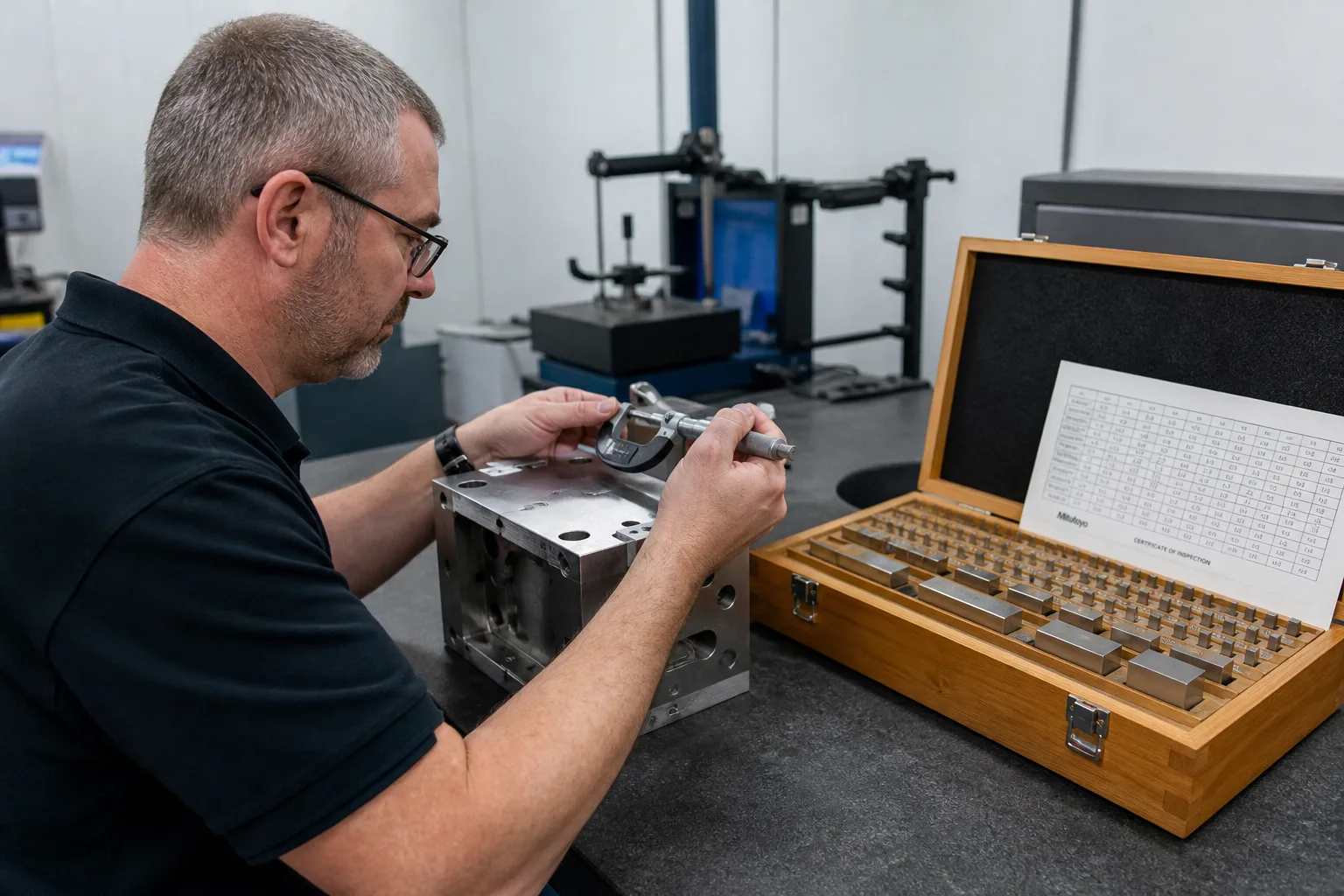
Fixtures follow the same pattern: tooling is not bound to product and operation, so changeovers grab the wrong fixture or an expired, uncalibrated gauge. These objects are expensive, their locations drift, and they have many states. Spreadsheet counts happen once a year; everything in between is memory.
Business objects and the state machine
Objects include mold/fixture master data, a bill of structural parts, a state machine, checkout and machine-loading records, maintenance and calibration, shot-count life, and alerts. The master at least needs a unique code, applicable products and machines, design life, current location, and an owner. Structural parts with their own codes must be able to return to the original master after teardown; a “parts pool” that scatters history is forbidden.
Suggested states: in stock, reserved, on machine, tryout, maintenance, repair, awaiting calibration, mothballed, scrapped. Hard rules: uncalibrated or expired calibration cannot go on a machine; tools in repair cannot be scheduled; loading onto a machine requires scanning both the mold code and the machine code to prevent the wrong mold; production shot counts write back to life, with early alerts near the threshold; tryout is a separate state, does not count toward production life, and does not occupy “available for scheduled production.”
Roles, capture, and how to connect MES
Stores owns location and counts; the mold engineer owns maintenance, calibration, and repair conclusions; the shift leader scans on and off the machine; maintenance changes state and logs replaced parts; planning only schedules molds in a “ready to load” state. Shift handover is by scan; verbal handover does not count.
Prefer QR / RFID for capture. Shot counts can write back from the injection machine or press counter interface; without an interface, backfill on unload reporting and sample-check. When MES starts a job it must validate: whether the work-order mold is on this machine, whether calibration is valid, whether life is over limit. A failed check must block start—not a popup that still lets operators force-start.
Build order and acceptance
First unique codes, the state machine, and dual-code loading; then calibration-expiry gates; last, shot-count write-back and MES start validation. Cycle counts by location; discrepancies must be traced to the last checkout or load. Acceptance covers: expired-calibration block, repair-occupancy block, dual-code mismatch block, shot-count alerts, sub-part teardown/reassembly that can restore the parent, and inventory shortages that can be traced to a person.
Do not roll out thousands of sets plant-wide on day one. Pick the product family with the tightest deliveries and the most frequent changeovers, and first make the “ready to load” state true. Weekly mold-prep lists come from the system, not from the shift leader’s memory. Exceptions (emergency borrows, uncoded old molds) get a deadline to receive codes; after the deadline, uncoded tools cannot enter critical orders.
Why life and calibration cannot rest on “experience says it is fine”
Shot-count life must split cavities and wear parts: the main body lasts long; sprue bushings, ejector pins, and slides last short—alerts should hit the sub-part, not scrap the whole set. Calibration intervals follow gauge class and product tolerance; appearance parts and dimensional parts cannot share one interval. Photographing certificates is not enough: expiry must be a gate field for machine loading; on the day it expires, planning should no longer see that mold.
When a mold is shared across products, reservation calendars must be exclusive: while product A occupies it, product B cannot reserve the same set. Fixture-to-mold bindings also belong in the master; the changeover list should emit a “mold + fixture + gauge” kit, and a missing piece must not show as startable. Uncoded old molds are the biggest rollout resistance: start with “mandatory coding for critical product families,” deadline the rest; uncoded old molds only for non-critical orders, with a risk flag on the work order.
Cycle counts and repair occupancy: stopping fake “in stock”
Cycle counts by location, not only year-end. Finding “books say in stock, scan finds no code” must raise a variance ticket that day: last person who loaded it, last person who checked it out, whether a repair bay never unloaded it. Repair occupancy must occupy a location or a “repair warehouse”; the repair room cannot be an off-book black hole. If a scrapped mold’s cavity is reused as parts, those sub-parts move to a new master and the old master closes, so two life datasets do not run in parallel.
The usual reason dual-code loading fails: the machine code is on the electrical cabinet, the mold code is on the lifting eye, and the scanner cannot reach. During rollout, a workstation code may stand in for the machine code, but it must map to a specific machine master. A shift leader may scan on someone’s behalf, but the operator field cannot be empty, or accountability falls back to “everyone scanned.” After tryout, only a pass may move state from tryout to in-stock or schedulable; a fail must go to repair, never straight onto a production order.
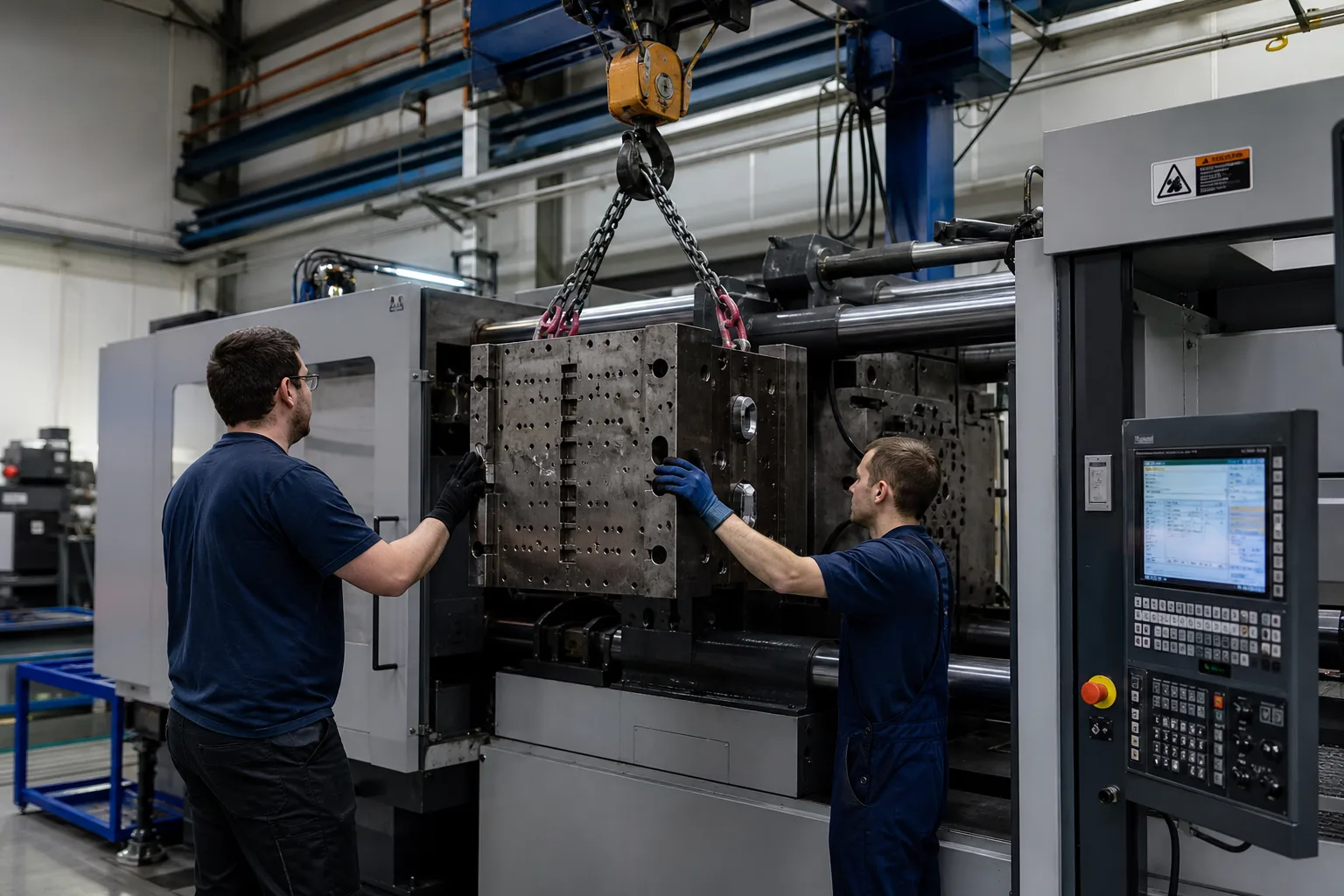
Lifting and storage orientation also belong in the master: some molds may only stand upright; laying them wrong damages guide pins. Location load and height limits go into the system and block at inbound reservation, not when the forklift reaches the door. Two molds that share inserts cannot run at once; available inventory must be constrained by inserts. New-mold acceptance includes a dimensional report and tryout shot count; unaccepted tools cannot enter the production reservation pool. Hot-runner temperature parameters should hang on the mold master and come out at changeover, instead of living only in a veteran’s head. Gauges and molds have separate calibration intervals; an expired gauge likewise blocks loading. Night-shift changeovers require two-person scan confirmation so a single wrong scan cannot still start. Tryout sprue weight can be a secondary check; abnormal weight flags a wrong-mold risk.
Shop-floor objects that are small assets with large risk fit a custom system that writes the rules into the process. Shandong XYN Information Technology Co., Ltd. (XYN Tech) has long delivered factory-side custom software. Official site https://www.xynkeji.com.